Powered by Local Knowledge: CER’s Cultural Ambulance Protects Heritage in Crisis
When cultural heritage is destroyed, communities lose far more than buildings, artworks, or archives. They lose stories, symbols, traditions, and spaces that shape their identities, which makes recovery even harder.
Today, cultural heritage is facing unprecedented levels of destruction: UNESCO reports that one in six heritage sites worldwide is now at risk from climate‑related threats, while conflicts continue to erase irreplaceable history in real time.
In just the past few years, more than 640 historic buildings were damaged in Beirut’s 2020 port explosion, Morocco’s 2023 earthquake left 75% of the Tinmel Mosque destroyed, and Sudan’s National Museum lost 90% of its holdings to looting.
Rapid Response, Local Knowledge
Myriad USA’s nonprofit partner, the Netherlands-based Cultural Emergency Response (CER), plays a critical role in preserving heritage often overlooked during crises. It works directly with local organizations across the world to deliver fast, flexible, community‑led first aid—earning its reputation as a “cultural ambulance.”
Working side by side with those closest to their heritage enables us to respond with solutions grounded in local knowledge. It’s an approach that empowers communities, ensuring support is inclusive, accessible, and truly responsive to their needs.
Since 2003, CER has supported more than 565 emergency projects across over 85 countries, safeguarding museums, archives, archaeological sites, collections, and community cultural spaces. CER also advocates for cultural rescue to be recognized as a core component of humanitarian aid.
CER’s expanding network of Regional Hubs—from Central America and the Levant to the Western Balkans, the Caribbean, and the Black Sea—strengthens its funding model by putting decision‑making directly in local hands. This locally rooted approach enables CER to deploy rapid‑response grants within days, rather than the months typical funding cycles require. As Sanne Letschert explains, “Because our Regional Hubs understand local risks and priorities, they can mobilize quickly and effectively.”
The following case studies highlight how CER protects cultural heritage when it’s most at risk.
Ukraine Emergency Winterization
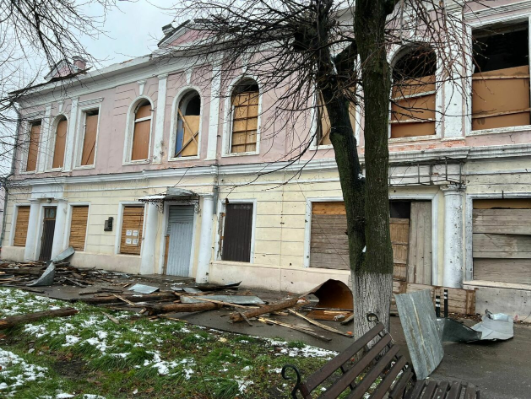
With Ukrainian heritage facing destruction from targeted attacks, countless cultural sites remain at extreme risk of collapsing during harsh winter conditions. CER has supported urgent winterization efforts to stabilize sites so they can survive snow, ice, and freezing temperatures, making future restoration possible. This includes practical measures such as boarding up shattered windows to keep out snow, moisture, and animals, protecting what remains.
CER and its partners are protecting several of Ukraine’s oldest and leading cultural institutions, including the Library of Youth at the Museum of Ukrainian Antiquities in Chernihiv, the Bohdan and Varvara Khanenko National Museum of Arts in Kyiv, and the Okhtyrka Local History Museum in Sumy (pictured below).
Traditional Weaving in Myanmar
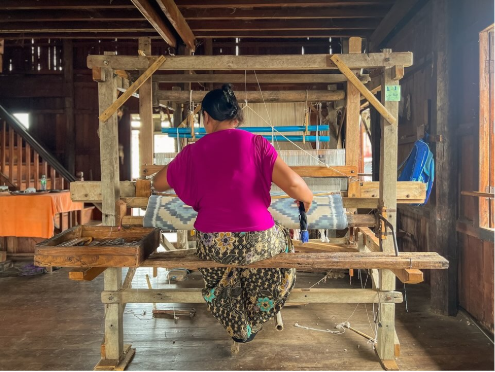
Typhoon Yagi struck Nyaungshwe Township in September 2024, submerging nearly 80% of the region. The flooding disrupted the centuries‑old Inle Ikat tradition, a craft deeply tied to local livelihoods and Myanmar’s cultural heritage. CER and its local partner, Turquoise Mountain, quickly stepped in to support 62 women weavers whose looms, tools, and homes were severely damaged. Today, more than 400 weavers across Inle Lake continue to safeguard distinctive techniques, natural dyes, and plant‑based fibers, with their workshops serving as vital communal spaces for women.
Cultural Heritage in Palestine
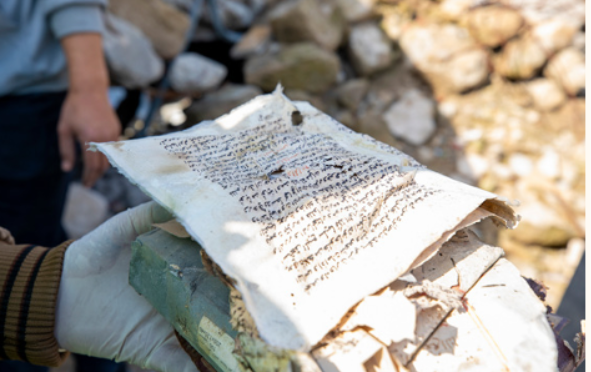
CER’s work in Palestine has included the careful removal and safeguarding of historic rubble from the damaged Souq al-Qissariya mosque—cleaned, secured, and stored by local partners. Local teams identified a safe location nearby, cleaned and sorted the rubble, coordinated with authorities on safety measures, and transported the materials for secure holding until further restoration is possible. CER also supported additional critical efforts, including the establishment of Gaza’s Heritage Rescue Lab, which digitized and preserved Riwaq’s archive with more than 150,000 records of historic buildings and landscapes, the preservation of the traditional Majdalawi weaving craft, and emergency assistance to artists in the West Bank.
Funding Cultural First Aid
CER’s vision is a world where every community can safeguard its own culture in times of crisis, and donor partnership is essential to making that vision a reality.
With plans to strengthen emergency response systems and establish two new Regional Hubs in South/Southeast Asia and in West or Sub-Saharan Africa, CER aims to raise $11.4 million over four years to expand local capacity, advance training and advocacy, and embed cultural protection within broader humanitarian frameworks.
Donor support and flexible, unrestricted funding power CER’s ability to act within days—not months or years—ensuring cultural lifelines are protected at their most vulnerable moments. Learn more and support CER’s mission through its American Friends Fund hosted at Myriad USA: https://www.every.org/stichting-cultural-emergency-response/